Kylian Mbappé scored in the 2018 World Cup final at 19, becoming the second teenager to score in a World Cup final, after Pelé. Four years later, he scored a hat-trick in the 2022 final, the first since 1966. Whatever your player's stage, whether it is a club final, a showcase, or an ID camp, the same question applies: how do you perform when it matters most?
Pro Path FC is not affiliated with Kylian Mbappé. This article uses his public record as an example.
Why pressure affects performance
When the stakes rise, the body reacts: faster heartbeat, tight muscles, racing thoughts. A little of that energy can sharpen performance. Too much leads to tense touches, rushed decisions, and hesitation. The goal is not to eliminate nerves, but to manage them.
How players build composure
Experience
The more big games a player plays, the more normal they feel. Seek out tournaments, showcases, and higher-level competition. Pro Path's international tournaments are partly about exactly this.
Preparation
Confidence comes from knowing you have done the work. Players who have trained a skill thousands of times trust it under pressure.
Routines
Pre-game routines give players a sense of control. A consistent warm-up, the same music, a few deep breaths. See Visualization and Game-Day Routines.
Focusing on the next action
Great players focus on what they can control: the next touch, the next run, the next decision. Not the score, the crowd, or the scouts.
Breathing
Slow, deep breaths, in through the nose for four counts and out through the mouth for six, help calm the body before kickoff or a penalty.
Practical tools for young players
- Pressure practice. Add consequences in training: a penalty shootout at the end of practice, or a finishing game where misses mean push-ups.
- Self-talk. Short, positive cue words like "first touch," "be brave," or "next play."
- Reset after mistakes. A physical cue, like clapping hands or touching the grass, to move on. Read Handling Mistakes and Bad Games.
- Smaller goals in big games. "Win my first three duels" is easier to focus on than "play the game of my life."
What parents can do
Before big games, keep the mood relaxed and normal. Focus on effort and enjoyment, not results. After the game, let the player lead the conversation. See How to Talk to Your Player After a Game.
Building big-game players at Pro Path
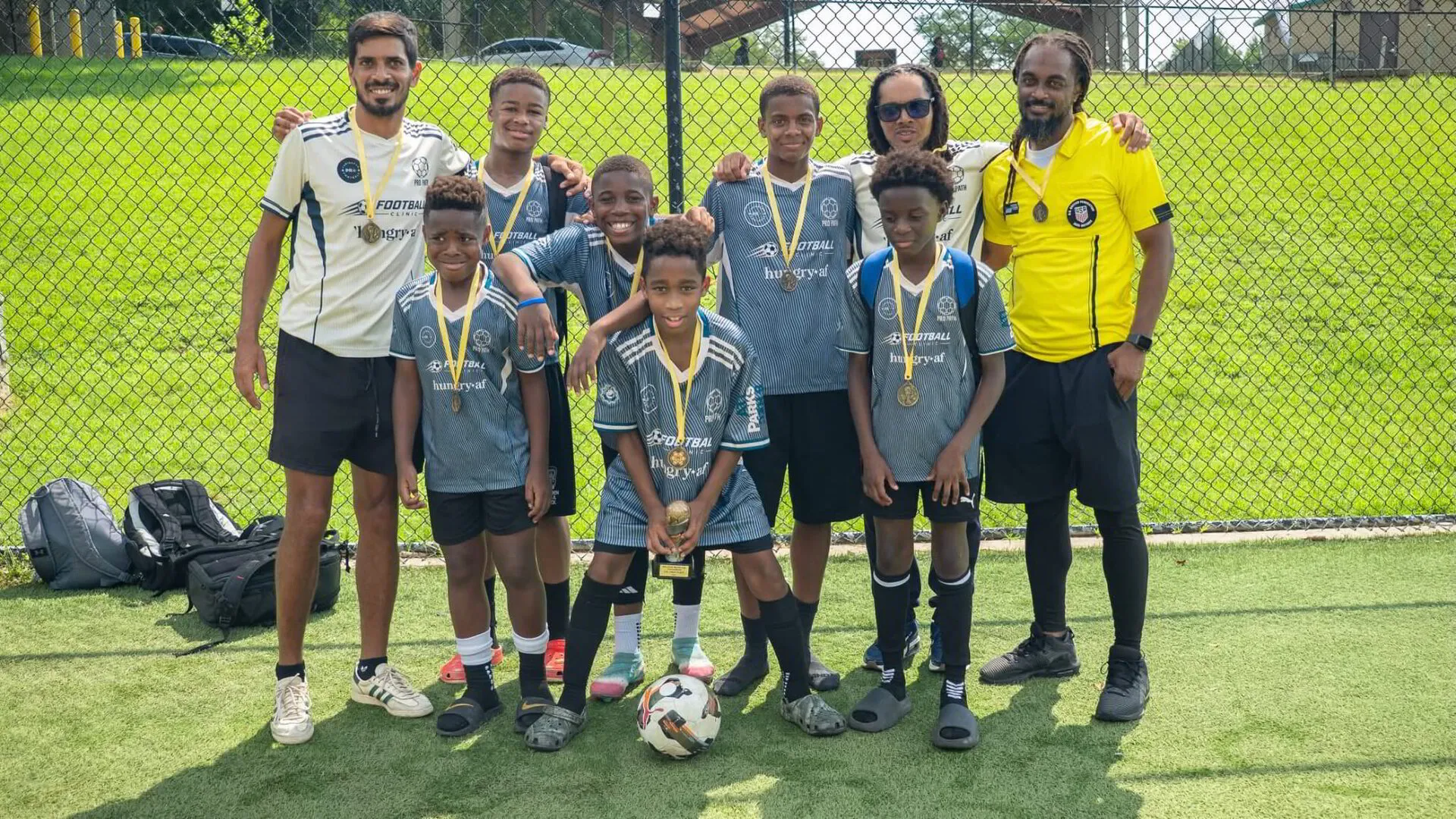
Pro Path puts players in challenging environments: competitive small-sided games at BASE Athletics, select team tournaments, ID camps, and international competition. We also coach the mental side of performance, so players are ready when their moment arrives.