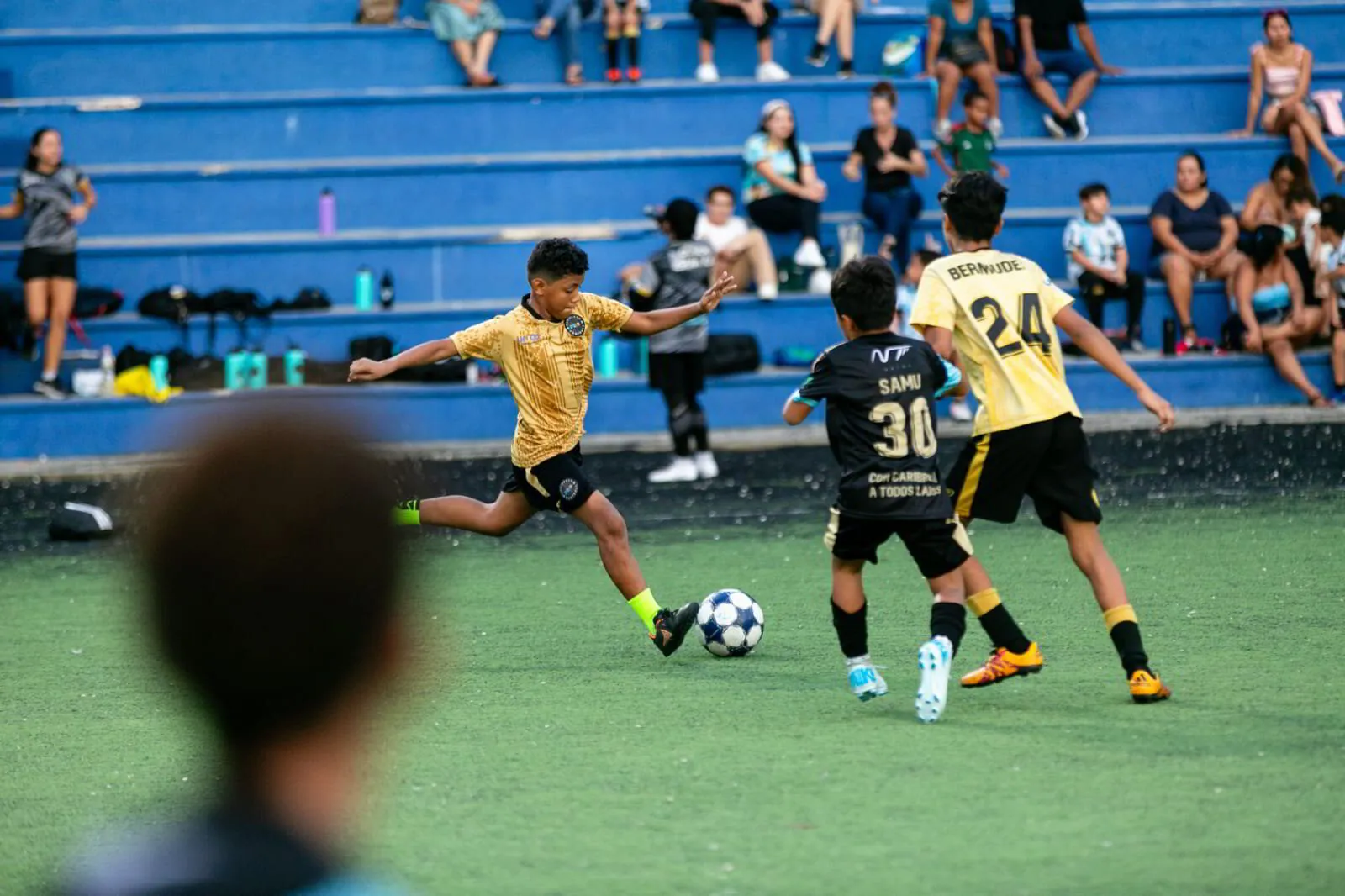
Watch the best midfielders before the ball reaches them. Their heads are moving: left, right, over the shoulder. By the time the ball arrives, they already know where every player is and what they will do next. That habit is called scanning, and combined with good body shape, it is what allows players to pass calmly under pressure.
What scanning is
Scanning means quick looks around the field to gather information: where are the defenders, where are teammates, where is the space? Research on elite midfielders has found that the best players scan far more often than average players in the seconds before receiving.
Why it matters
- Faster decisions. Players who scan know their options before the ball arrives.
- Fewer turnovers. They see pressure coming and avoid it.
- More forward passes. They spot openings that others miss.
- Better first touch. They know which direction to touch the ball.
Body shape: open to the field
An open body shape means standing sideways to the passer, so you can see both the ball and the field ahead. Receiving with the back foot, the foot farther from the passer, lets a player turn forward in one movement. A closed body, facing the passer square, forces players to play backward.
How to scan
- Look before the pass is played. Scan while the ball is traveling to a teammate.
- Look again as the ball travels to you. Update your picture.
- Quick glances, not long stares.
- Look over both shoulders.
- Know your plan before the ball arrives: first touch direction, then the pass.
Drills to build scanning
Color call
A coach holds up colored cones behind the player. The player must call the color before receiving the pass. This forces them to look over their shoulder.
Rondo with conditions
In a rondo, require one-touch or two-touch passes. Players must scan constantly to find the open teammate.
Receive and play forward
In a small grid, the player receives from behind and must play to a target in front. A defender closes from one side. Players learn to check their shoulder and turn away from pressure.
Small-sided games with touch limits
Limiting touches in a small-sided game forces quick scanning and passing. Read Small-Sided Games: Why 4v4 and 5v5 Build Better Players.
Choosing the right pass
- Ground passes with the inside of the foot for accuracy.
- Pass to the correct foot, usually the one away from pressure.
- Weight the pass so teammates can play it first time.
- Play forward when possible, but keep the ball when the forward pass is not on.
Make it a habit
Scanning feels unnatural at first. Players should practice it in every session until it becomes automatic. Parents can help by asking after games: "Did you look before you got the ball?"
Pro Path sessions at BASE Athletics build scanning into every small-sided game. Pair this with our first touch drills. Reserve a spot.