Between ages 9 and 13, young players go through a valuable window for developing coordination, balance, and quickness. The nervous system is highly adaptable, and kids who build broad athletic skills during these years often move better for the rest of their careers. The key is training that is varied, fun, and age-appropriate.
What to focus on
- Coordination: controlling arms and legs together
- Balance: staying stable while moving and changing direction
- Agility: stopping, starting, and changing direction quickly
- Reaction: responding fast to what happens
- Speed: short sprints with good form
At this age, heavy weights and long, grinding fitness runs are not needed. Body-weight movements, games, and short, sharp drills work best.
Agility drills
Ladder footwork
Quick feet through an agility ladder: two feet in each box, lateral shuffles, in-and-out. Add a ball at the end of the ladder to dribble away.
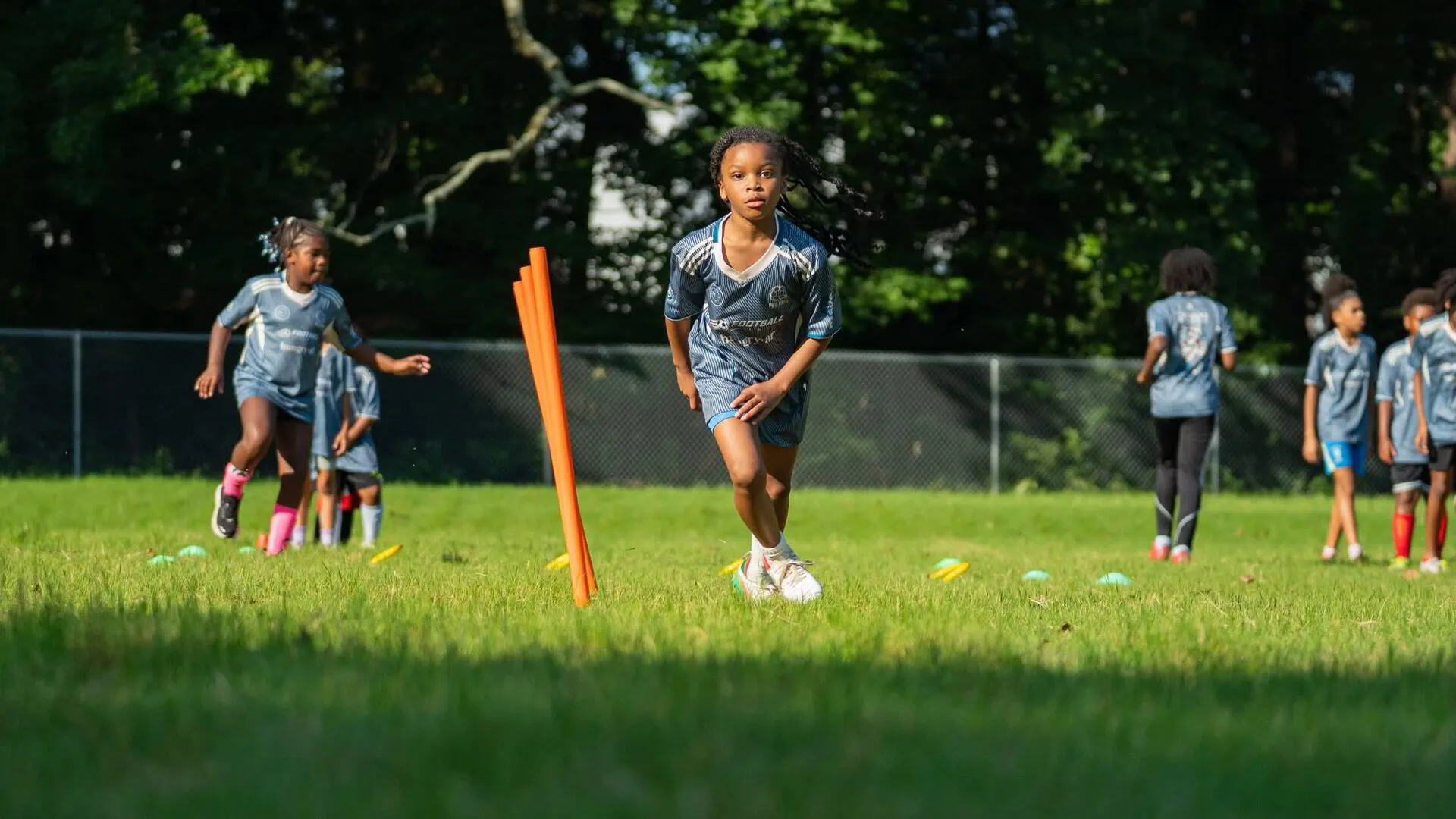
Cone zigzag
Sprint through zigzagging cones, planting and cutting sharply. Then repeat with a ball.
Box drill
Four cones in a square. Sprint forward, shuffle sideways, backpedal, shuffle back. Builds multi-directional movement.
Coordination drills
Skipping and bounding
A-skips, B-skips, and side skips build rhythm and running mechanics.
Hand and foot games
Throw and catch while balancing, or juggle a tennis ball while dribbling a soccer ball. Fun and great for coordination.
Single-leg balance
Stand on one leg and pass a ball from a partner back with the other foot. Then close your eyes. Builds ankle stability.
Reaction and speed
Reaction sprints
Players start in different positions (sitting, lying down, facing away) and sprint on a signal.
Tag games
Classic tag, with or without a ball, is one of the best agility exercises ever invented.
Race to the ball
The coach plays a ball into space, and two players race to win it and score on a small goal.
Why playing other sports helps
Basketball, tennis, gymnastics, and martial arts all build coordination and agility that transfer to soccer. Many experts encourage young athletes to play multiple sports before specializing. Read 5 Things the 10,000-Hour Rule Gets Wrong.
Growth spurts
When kids grow quickly, coordination can temporarily drop and joints can become sore. Be patient, reduce intensity if needed, and see a doctor if pain persists. This article is general information, not medical advice.
How much
Ten to fifteen minutes of agility and coordination work as part of a warm-up, two or three times a week, is plenty for most players this age.
Athleticism at Pro Path
Pro Path sessions at BASE Athletics include dynamic warm-ups, agility, and speed work built for growing athletes, then put it all to work in small-sided games. For older players, read Speed Is Trained Too. Reserve a spot.