Ask almost any professional soccer player how they got there and you will hear a version of the same story: they played constantly. Before school, after school, on weekends, in the street, at the park, against older kids, alone against a wall. Long before anyone was paying them, they had touched the ball tens of thousands of times.
At Pro Path FC we use 10,000 hours as a north star for players who want to play at the highest level. It is a big, round, memorable number. It reminds families that elite skill is built over years, not seasons. But the number only helps if you understand what it is measuring, and what it is not.
Where the number comes from
The idea traces back to research by psychologist K. Anders Ericsson, whose 1993 study of musicians found that the best performers had accumulated far more hours of focused, structured practice than their peers. Journalist Malcolm Gladwell later popularized the finding as the "10,000-hour rule" in his book Outliers.
Later research added important nuance. A 2016 meta-analysis led by Brooke Macnamara found that practice hours explained a meaningful share of the differences between athletes, but not all of it. Coaching quality, the type of practice, psychology, physical development, and opportunity all matter too. You can read more in our breakdown of what the research really says.
The takeaway for families is simple: hours are necessary, but not sufficient. No one becomes a professional without a huge volume of practice. But two players can log the same hours and end up in very different places.
What counts as an hour
Not every minute around a soccer ball is equal. We think about a player's hours in three buckets:
- Deliberate practice. Focused work on a specific weakness, with feedback, at the edge of the player's ability. This is the most valuable time and the most demanding.
- Deliberate play. Pickup games, futsal, street soccer, and small-sided games where players experiment, solve problems, and touch the ball constantly. This builds creativity and decision-making. Read more in Deliberate Play: Why Street Soccer Counts.
- Competition. Matches teach pressure, game reading, and consistency, but a player may touch the ball only a few dozen times in a full game.
A healthy path to 10,000 hours includes all three, weighted heavily toward the first two.
The math, honestly
If a player starts serious training at age 9 and wants to reach 10,000 hours by 18, that is roughly 1,100 hours a year, or a little over 20 hours a week. That sounds like a lot, and it is. But it is not 20 hours of drills. It is team practice, individual work, pickup games at the park, futsal in the winter, and matches, added together.
For a younger player, the goal is not to hit 20 hours next week. It is to build habits that make soccer a daily part of life, then increase intensity as the body matures. Our week-by-week plan shows what that looks like by age.
Quality beats quantity at every age
Here is what separates productive hours from wasted ones:
- A clear goal for every session. "Get better" is not a goal. "Receive across my body with my left foot 50 times" is.
- Feedback. From a coach, from video, or from a simple result like hitting a target.
- Repetition at game speed. Slow technique work has its place, but players must eventually perform under pressure.
- Rest and recovery. Tired, sore players practice bad habits and get hurt. See Avoiding Burnout on the Road to 10,000 Hours.
What 10,000 hours looks like by stage
The path is not a straight line. What a player should be doing changes as they grow.
Ages 9 to 11: Fall in love with the ball
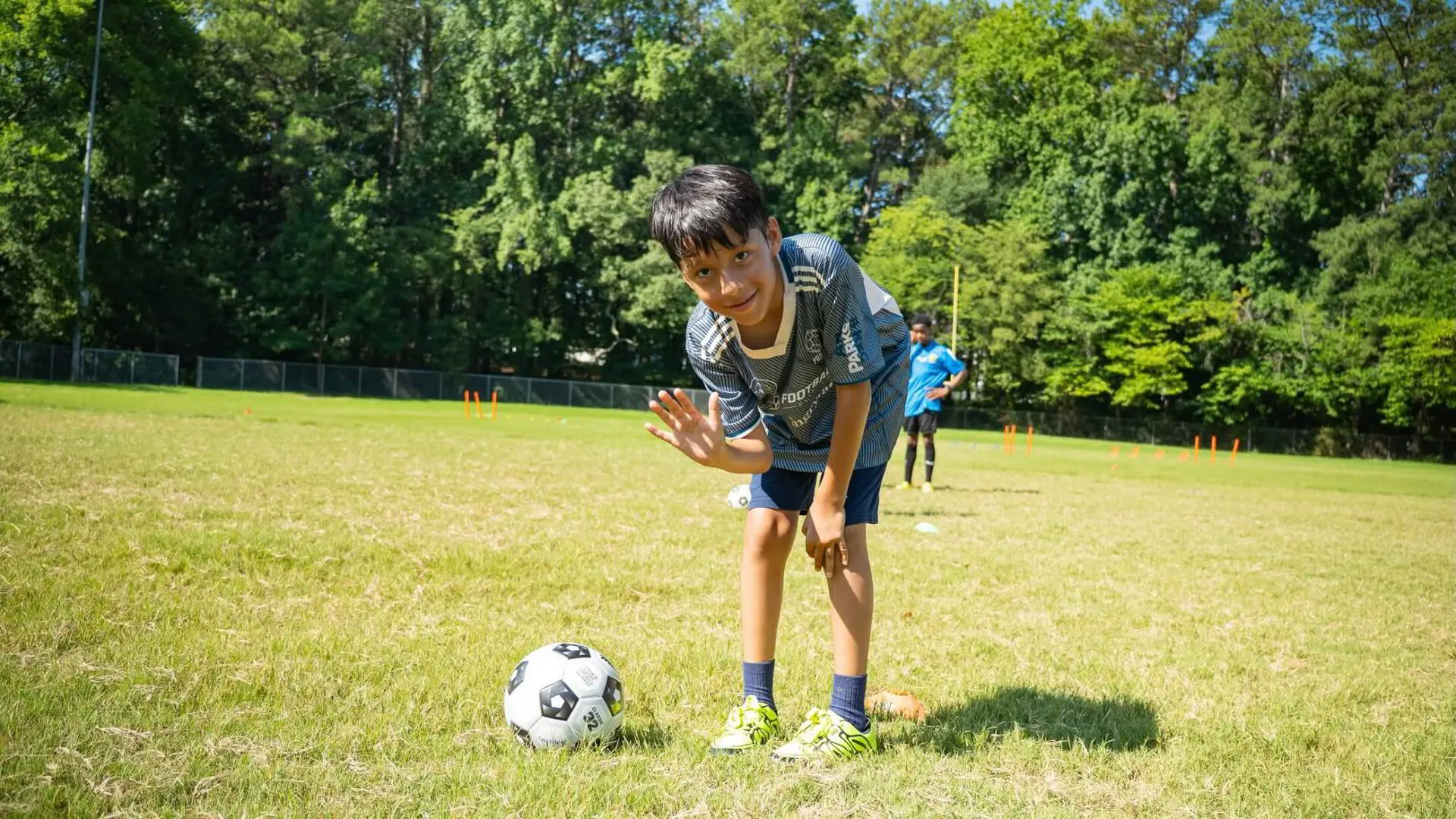
The priority is touches, fun, and variety. Players at this age learn motor skills quickly, so lots of ball mastery, small-sided games, and free play pay off for years. Playing other sports builds coordination too. The biggest risk at this stage is not too few hours. It is a child who stops enjoying the game.
Ages 12 to 14: Sharpen the tools
Technique gets refined under pressure: first touch on the half-turn, passing with both feet, beating defenders in tight space. Players start to understand positions and team shape. This is when deliberate practice starts to take a bigger share of the week. See First Touch: 7 Drills and the 30-day weak foot challenge.
Ages 15 to 17: Train like a prospect
Training becomes position-specific and physically demanding. Strength, speed, recovery, and film study join the week. Competition gets tougher, and players who want to play in college start building a recruiting profile. Read our College Soccer Recruiting Timeline.
How to know the hours are working
Hours are an input. Families also need to see outputs. Signs a player's training is paying off:
- Measured skills improve. Juggling records, passing accuracy, sprint times, and weak-foot reps all trend up over months.
- Games look different. The player scans more, keeps the ball under pressure, and takes on defenders with confidence.
- Coaches notice. Feedback shifts from basics to finer details.
- The player wants more. Motivation that comes from the player, not the parent, is the best sign of all.
If the hours are going up but none of these are moving, the problem is usually quality, not quantity. Read Deliberate Practice vs. Just Playing.
A lesson from the top
Kylian Mbappé grew up with a father who coached at the local club and a community where kids played constantly. By the time he reached the Clairefontaine academy and then Monaco, he had already built an enormous base of touches and games. Read How Kylian Mbappé Was Developed for the full story. The lesson for American families: the early, informal hours matter as much as the structured ones.
Common questions
Is it too late if my player is 14 and has not trained much? No. Many players accelerate quickly in their teens with focused training. The plan simply needs more deliberate practice and smart use of every hour.
Does every hour need a coach? No. Some of the most valuable hours are solo practice and pickup games. Read Why the Best Players Practice Alone.
Will 10,000 hours guarantee a scholarship or a pro contract? No one can promise that. What the hours do guarantee is a better player with more options, including college soccer, and skills that last a lifetime.
How Pro Path builds hours that count
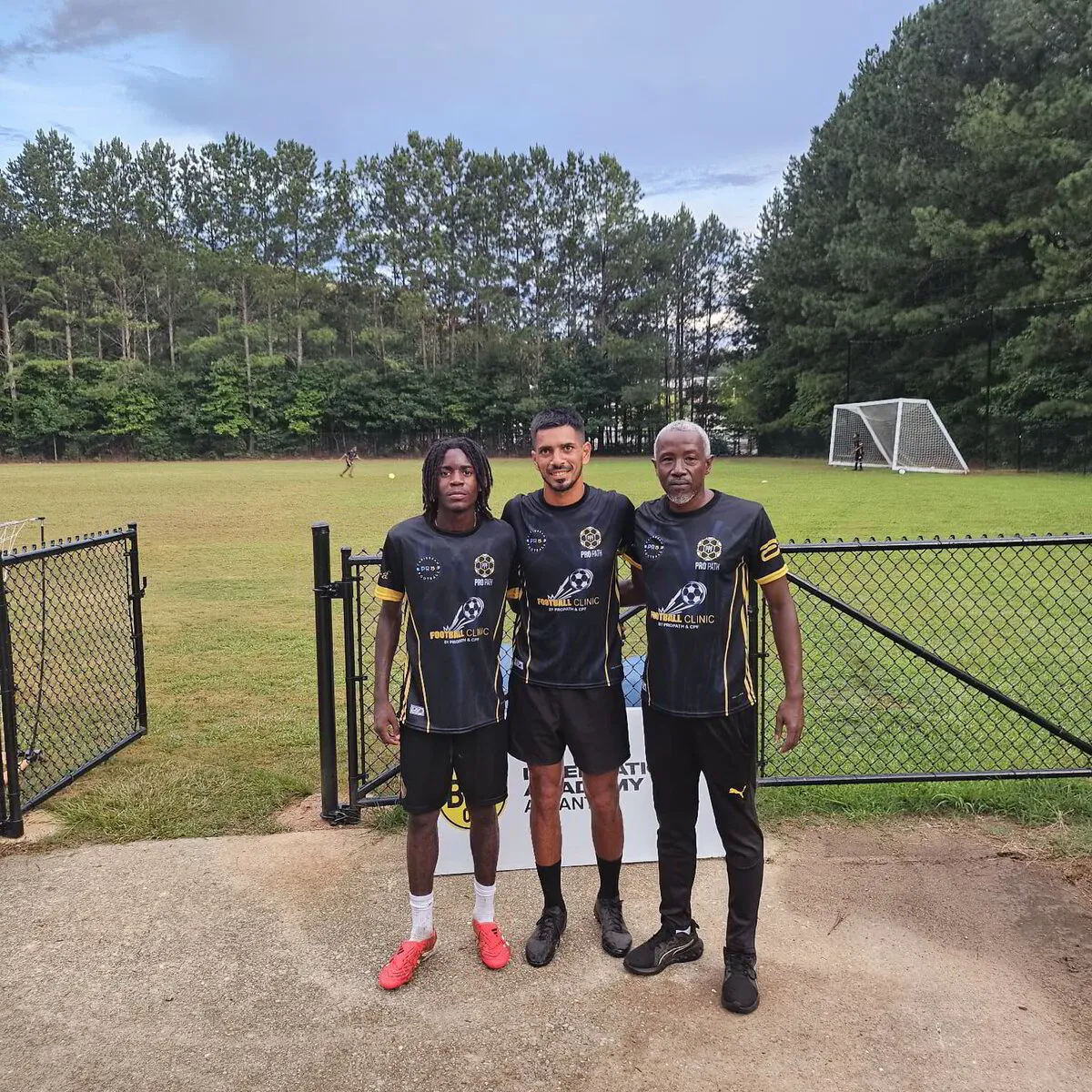
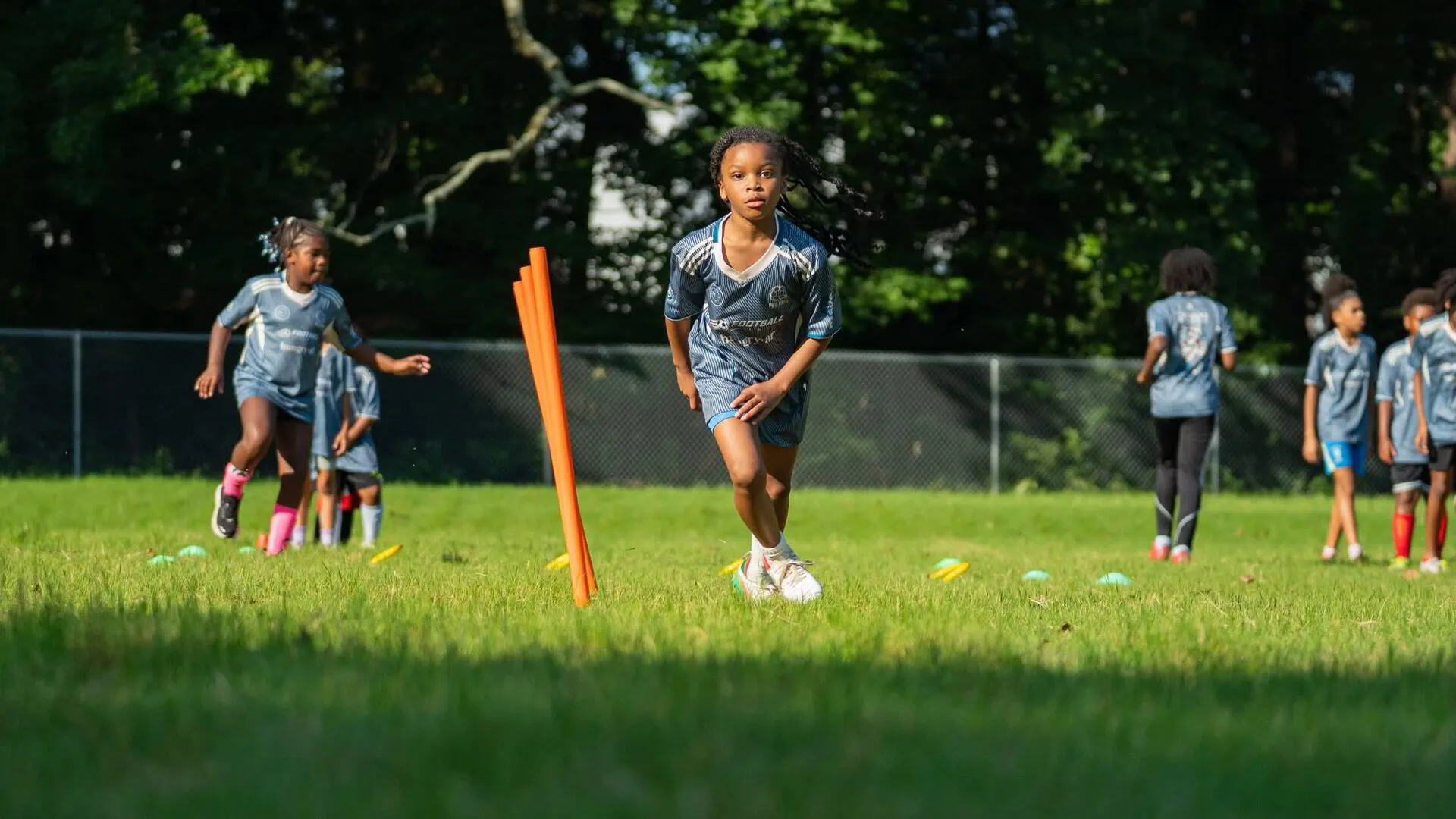
Every Pro Path session is designed around these principles. Our small-group training at BASE Athletics in West Midtown puts players in tight, small-sided spaces where they touch the ball hundreds of times. Our Online Academy gives players structured sessions they can repeat at home between team practices. And our evaluations tell families exactly which skills deserve the next block of hours.
The road is long. The best time to start counting is today.
Ready to see where your player stands? Book a Pro Path evaluation and get a clear plan for the next thousand hours.